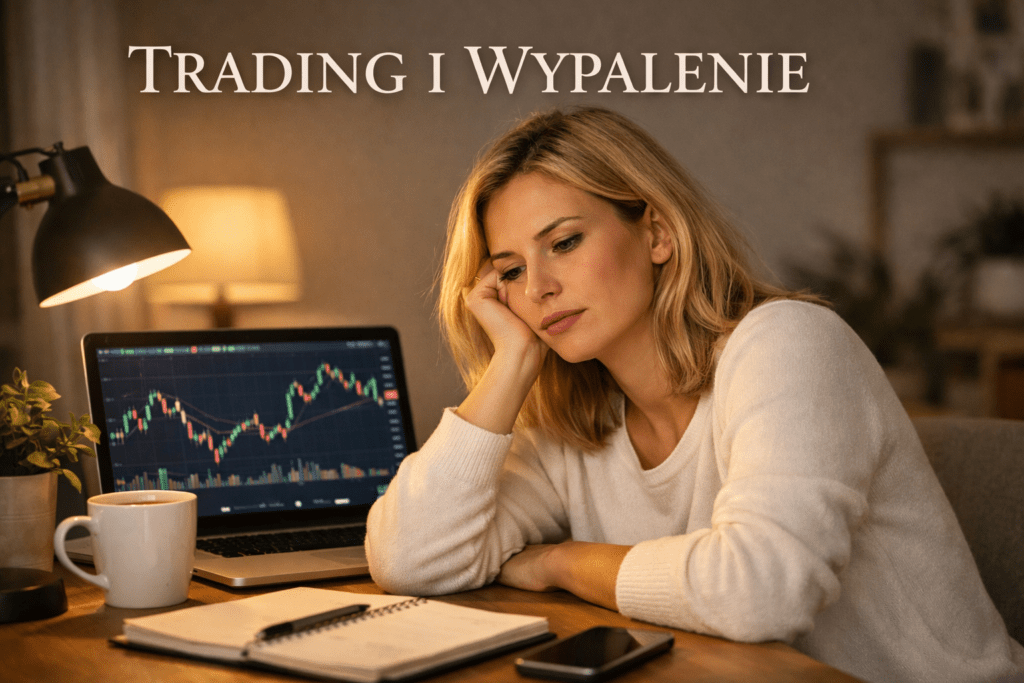
Trading and burnout often go hand in hand – especially when you spend hours sitting in front of charts, tracking every tick, and feeling like you “have to be in the market all the time” or you’ll miss something.
1. What is trading burnout?
Trader burnout is a state of physical, mental, and emotional exhaustion that occurs after a long period of stress, pressure, and an overload of screens and decisions.
It's not just "tired after a hard day"—it's when you:
* lose motivation to analyze and learn,
* react nervously to every price movement,
* feel like trading is "sapping your energy."
Research shows that constant decision-making amidst high market volatility and long hours in front of a screen lead to mental fatigue, which impairs concentration, emotional control, and decision-making.
2. How can you tell if you're spending too much time on the charts?
Here are some warning signs that traders often see:
Constantly thinking about the market – even after closing the platform, you're still counting "what if...".
* Loss of concentration – you stare at the chart and... you don't see anything meaningful anymore, you're making decisions automatically.
* Constantly thinking about the market – even after closing the platform, you're still counting "what if...".
* Emotional rollercoasters – your mood depends solely on whether you're ahead or behind today.
* Increasingly more screen time – what was supposed to be 1-2 hours of analysis turned into 5-6, and you're still "looking for a setup."
* Neglecting other things – family, sleep, food, exercise – everything takes a backseat because "the market is more important."
Research on excessive screen time clearly shows: too many screens = higher stress, more anxiety, worse mood, poorer concentration, and increased impulsivity.
3. Why spending a lot of time looking at charts ruins your decisions
Your brain is not a machine that can analyze the markets at the same level for 8 hours a day. Studies on mental fatigue show that after 45–90 minutes of continuous cognitive work, the following decreases:
* alertness and concentration,
* ability to inhibit impulses,
* quality of decisions and planning.
In addition, there is so-called digital fatigue – an overload of visual stimuli from screens, which:
* fatigues the prefrontal cortex (the part responsible for decisions),
* shortens attention span,
* increases susceptibility to errors and "impulsive shots."
It's no coincidence that many traders notice that they make their worst decisions at the end of the day, after hours of looking at charts—it's pure neurobiology, not a lack of knowledge.
4. How to recognize that you're approaching burnout (checklist)
The sooner you notice it, the easier it is to react. Pay attention to:
* You're losing patience – you get angry more easily, any correction triggers strong emotions.
* You feel constantly tired, even if you've been physically "doing nothing" and just sitting at the computer.
* You're breaking your own rules more and more often – overtrading, no stop losses, entering with FOMO.
* Trading stops being a challenge and starts feeling like a burden.
* You sometimes "escape into the charts" from other problems – trading as an escape, not a conscious decision.
If some of these points sound "all too familiar" – it's no longer just fatigue; it's a sign that you're approaching burnout.
5. What to do about it – practical steps
1) Set time limits before charting.
Research shows that shorter, intense sessions with breaks are more effective than clocking in for hours without a break.
Practical:
* Set specific trading hours (e.g., 9:00 a.m.–12:00 p.m.) and stick to them.
* After 45–60 minutes of work, take a 5–10-minute break—no phone calls, preferably getting up from your desk.
* Instead of sitting all day "because something might happen," choose specific sessions where you actually have an advantage.
2) Regular breaks and "brain reset"
NIH research shows that short breaks while studying or working allow the brain to "recreate" what it has been working on and strengthen memory traces - meaning a break improves learning and efficiency, not limits it.
In practice:
* Get up, walk around, drink some water, look out the window – just get away from the screen.
* Apply a simple rule: no two hours of staring at a chart non-stop.
3) Take care of your body – it supports your psyche.
The daily life of a trader is sitting, coffee, and a screen. Research clearly shows that regular exercise, sleep, and diet reduce the risk of burnout, depression, and anxiety.
Minimum:
* Exercise 3-5 times a week (gym, walk, run – whatever).
* 7-8 hours of sleep (lack of sleep = more mistakes, more impulsiveness).
* Limiting junk food, which only further depletes your energy.
This isn't a lifestyle – these are the foundations that give your brain a chance to function at the level of a "trader" and not a "chart zombie."
4) Treat yourself to a mini “digital detox” from trading.
Digital detox research shows that short periods of consciously limiting screens improve mood, concentration, and a sense of control.
If you feel like you've had enough:
* Plan a day or weekend without trading—no charts, no stock market apps.
* Engage in something completely different: family, sports, hobbies.
* When you return to the market, you'll notice your head feels lighter and your perspective broadens.
This isn't a waste of time - it's brain service.
5) Maintain boundaries between trading and life.
Research and experience of traders show that isolation and lack of balance (only work/screen) are one of the main factors leading to burnout.
In practice:
* Set a time after which you no longer open the platform.
* Don't track positions from bed, on your phone, or just before bed.
* Make sure you have time off trading during the week – consciously, not "if you get lucky."
6. When simple breaks are not enough – burnout vs. addiction.
Sometimes there is something more behind “burnout” – a real addiction to trading / day trading. Research and clinical practice show the following signals:
* you keep pushing even though you know it's destroying you mentally and financially,
* you've tried to "cut back on trading" many times, but you always end up back on track,
* you justify every hour at the chart as "research", even though you're not actually doing anything constructive anymore,
* your relationships, work, health are suffering - and you still "have to be in the market."
In this case, simply "take a break" may not be enough. Here's what you should do:
* talk to a psychologist/therapist who knows about trading,
* or join a community where people talk openly about psychology, not just about "profits".
7. Summary – trading is supposed to be a marathon, not a sprint.
Burnout in trading doesn't come from one hard day, but from a long period of time when:
* you ignore your limits,
* you spend too much time in front of the charts,
* you live only for the market,
* your body and mind are getting bigger and bigger bills.
The good news: you have a real influence on what your path will look like.
A few smart decisions:
* shorter, more mindful sessions,
* breaks, movement, sleep,
* time and screen limits,
* resetting with offline weekends, can do more for your results than another "magic metric."